Martian Organics: Is Ancient Life the Only Plausible Origin?
The quest for extraterrestrial life often conjures images of little green men, but the reality of astrobiology is far more nuanced, focusing on the fundamental building blocks of life: organic molecules. For years, scientists have scoured Mars for evidence of its ancient past, particularly signs that it once harbored conditions suitable for life. The latest Curiosity Rover Finds Mars’ Heaviest Organics: A New Frontier for Life has propelled this search into an exhilarating new phase, bringing the possibility of ancient Martian life into sharper focus than ever before. This groundbreaking Mars Organic Molecules Discovery by NASA's Curiosity rover challenges previous assumptions and opens up a fascinating debate: could these complex carbon compounds be a remnant of long-extinct Martian organisms, or do they tell a different story?
The detection of intricate carbon chains on the Red Planet represents a significant leap forward. While previous missions have found simpler organic compounds like methane, these new discoveries are far more complex, pushing the boundaries of what we thought Mars could preserve. Understanding their origin is crucial, not just for Martian science, but for our broader comprehension of life's potential beyond Earth.
Unveiling Martian Hydrocarbons: A Milestone in Discovery
In a truly remarkable feat, NASA's Curiosity rover, tirelessly exploring Gale Crater for over a decade, has identified the most complex organic molecules ever found on another planet. These aren't just simple carbon structures; they are hydrocarbons with up to 12 carbon atoms, specifically identified as decane, undecane, and dodecane. For context, these long chains of carbon and hydrogen are commonly associated with petroleum on Earth, suggesting a level of carbon chemistry previously thought improbable for Mars.
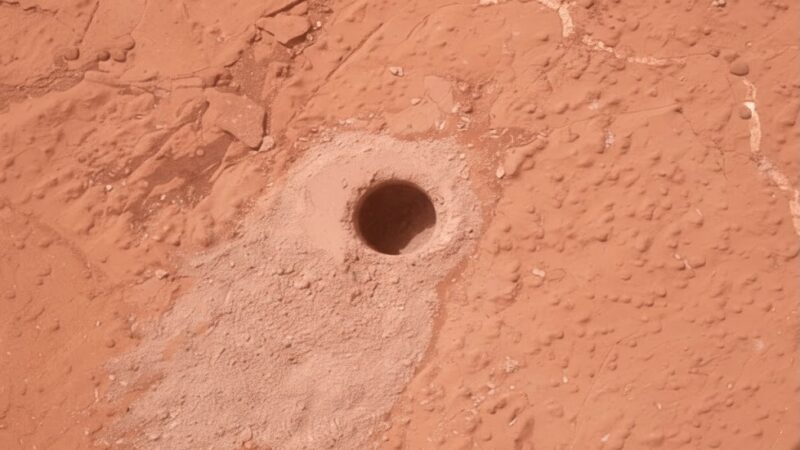
The discovery was made by Curiosity's Sample Analysis at Mars (SAM) instrument. This sophisticated onboard laboratory heats drilled rock samples to extreme temperatures, releasing gases that are then analyzed to determine their composition. The samples themselves were extracted from ancient Martian rock formations that once harbored liquid water, specifically "boxwork" formations. This Mars Organic Molecules Discovery of such large, intricate molecules immediately raises profound questions about their formation processes, pushing the boundaries of our astrobiological understanding.
The significance of these larger molecules cannot be overstated. Previous detections on Mars were limited to smaller, simpler compounds. The presence of decane, undecane, and dodecane indicates a more advanced and potentially widespread carbon chemistry, far beyond the initial expectations of scientists. This pushes the envelope for what kind of organic inventory Mars might possess, providing a richer substrate for potential biological evolution or complex geological processes.
The Boxwork Enigma: Clues from Ancient Water
The location of this extraordinary Mars Organic Molecules Discovery is as significant as the molecules themselves. Curiosity found these complex organics within "boxwork" formations, which are essentially fossilized water channels. Imagine ancient Martian bedrock crisscrossed by cracks through which water once flowed. As this water moved, it dissolved minerals and redeposited them, leaving behind intricate, hardened mineral structures. Over eons, erosion wore away the softer surrounding rock, leaving these geometric ridges standing in relief, resembling raised spiderwebs etched into stone.
What makes these boxwork formations so compelling? They are definitive evidence of long-lasting, stable water conditions, not just fleeting moisture. Water that persists long enough to dissolve and redeposit minerals signifies an environment where complex chemistry, potentially even life, could have developed and thrived. This stability is a critical factor for astrobiologists searching for environments capable of sustaining and preserving organic compounds. The fact that the most complex organics yet found were unearthed from such a prime location is no coincidence; it strongly hints at a connection between sustained aqueous activity and advanced carbon chemistry on ancient Mars.
Curiosity strategically drilled two samples from these formations in November 2025, resuming analysis in late January 2026 after a period of solar conjunction temporarily blocked communication with Earth. The rover's journey through Gale Crater, climbing Mount Sharp, continues to peel back geological layers deposited across billions of years, providing an unparalleled chronicle of Mars' watery past.
Decoding the Origins: Life, Geology, or the Cosmos?
With this exciting Mars Organic Molecules Discovery in hand, the scientific community is now grappling with the fundamental question of their origin. Currently, three main possibilities remain on the table:
- Biological Processes: Could these complex molecules be the ancient remnants of microbial life that once flourished on Mars? NASA suggests that the detected organics, particularly their complexity and surprising abundance in mudstone before radiation degradation, are "hard to explain without life." Some scientists even theorize they could be the remains of fatty acids, essential components of cell membranes. If proven true, this would be the most profound discovery in human history.
- Geological Reactions: Non-biological geological processes are also capable of producing organic molecules. For instance, hydrothermal activity deep beneath the surface, or interactions between water and certain rocks (like serpentinization), can synthesize various hydrocarbons. These processes don't require life and are known to occur on Earth and potentially other rocky bodies. The complexity observed might merely reflect specific long-term geochemical conditions.
- Meteoritic Delivery: Another significant source of organic molecules on planetary surfaces is meteorites and comets. These celestial visitors frequently bombard planets, carrying with them a rich payload of pre-biotic chemistry formed in space. It's plausible that some of the detected organics were delivered to Mars billions of years ago through such impacts, later becoming incorporated into the rock formations.
At this stage, Curiosity's data alone cannot definitively distinguish between these scenarios. Each possibility presents compelling arguments, and more work is needed to fully understand their origin. The challenge lies in isolating unique biomarkers (specific organic signatures that can only be produced by life) from geochemical background noise. This is where the next phase of Mars exploration becomes critical.
The Road Ahead: What Future Missions Will Tell Us
The journey to unravel the mystery of Martian organics is far from over. Curiosity will continue its methodical investigation of the boxwork formations through 2026, drilling additional samples to determine whether these heavy organic molecules are widespread across Gale Crater or concentrated in specific rock types. This distribution data will offer vital clues about their formation and preservation mechanisms.
However, the real game-changer in this investigation will come from NASA's Perseverance rover. Operating in Jezero Crater since 2021, Perseverance is meticulously collecting rock and regolith samples, sealing them in pristine tubes for eventual return to Earth. The Mars Sample Return mission, anticipated in the early 2030s, will bring these precious samples to terrestrial laboratories. On Earth, scientists will have access to instruments far more sensitive and diverse than anything that can currently be launched to Mars. These advanced tools can perform isotopic analysis, chirality studies (looking for the "handedness" of molecules, a strong biosignature), and high-resolution molecular identification, which could finally provide definitive answers regarding the origin of these complex organics.
If Perseverance's samples from Jezero Crater also contain complex organic molecules, it would be a powerful indicator that these compounds are common across Mars, rather than unique to Gale Crater. This widespread presence would suggest that ancient Mars had widespread conditions favorable for preserving organic chemistry, bolstering the case for either pervasive geological processes or even a more widespread distribution of ancient life. You can delve deeper into these implications in our article, Mars Discovery: Complex Organics Point to Widespread Ancient Chemistry.
A practical tip for aspiring astrobiologists: Understanding the capabilities and limitations of scientific instruments, both on-site and in Earth labs, is crucial for interpreting planetary data. The synergy between rover data and future sample return missions is vital for advancing our knowledge.
The Mars Organic Molecules Discovery by Curiosity is more than just a scientific finding; it's a testament to human ingenuity and our insatiable curiosity about our place in the universe. While ancient life remains a tantalizing possibility, the ongoing research promises to reveal unprecedented insights into the Red Planet's complex geological and chemical history. The debate continues, fueled by hard-won data from a tenacious rover, and the answers that lie ahead could redefine our understanding of life itself.