Mars Discovery: Complex Organics Point to Widespread Ancient Chemistry
The quest to understand Mars has long captivated humanity, fueled by the tantalizing possibility of past or even present life beyond Earth. For years, NASA’s Curiosity rover has been meticulously exploring Gale Crater, revealing a once water-rich environment capable of supporting microbial life. Now, the intrepid rover has delivered a truly groundbreaking finding: the detection of the most complex organic molecules ever found on another planet. This Mars Organic Molecules Discovery doesn't just push the boundaries of Martian chemistry; it strongly hints at a planet that once harbored widespread, intricate chemical processes, potentially laying the groundwork for life itself.
Unearthing Mars' Ancient Chemical Cookbook: The Curiosity Rover's Latest Triumph
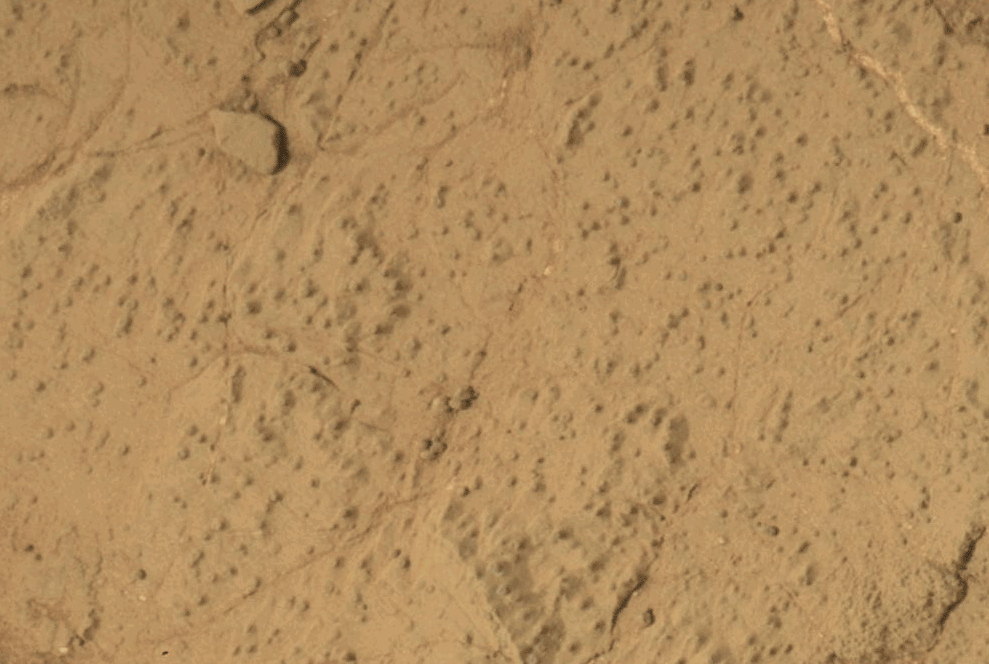
This recent revelation from Curiosity, operating far beyond its initial mission parameters, involved samples drilled from ancient Martian rock. Specifically, the rover's Sample Analysis at Mars (SAM) instrument identified hydrocarbons up to 12 atoms long: decane, undecane, and dodecane. These aren't just simple carbon compounds; their structure, reminiscent of petroleum on Earth, signifies a level of chemical sophistication previously unobserved on the Red Planet. Earlier detections were limited to much simpler compounds like methane, whose fluctuating presence itself suggested intriguing subsurface activity.
The significance of these complex molecules is amplified by their geological context. They were found within unique "boxwork" formations – intricate, raised spiderweb-like patterns etched into stone. These formations are the fossilized remnants of mineral deposits left behind by ancient water flowing through cracks in the rock. When this water eventually evaporated or drained, the harder mineral veins remained, while softer surrounding material eroded away, leaving behind these striking geometric ridges. The presence of such formations indicates stable, long-lasting water conditions, critical for the development and preservation of complex chemistry. This isn't fleeting surface moisture; it speaks to sustained environments where chemical reactions could thrive and potentially evolve.
Curiosity's ability to identify these larger, heavier organic molecules represents a significant leap in our understanding of Mars' geological and chemical past. It suggests that Mars was not merely a dormant, sterile world but a dynamic environment where the building blocks of life could have formed and persisted for billions of years.
Beyond Simplicity: Why Complex Organics Matter for Martian Habitation
The detection of decane, undecane, and dodecane opens up a fascinating, albeit complex, scientific debate about their origins. Currently, three main possibilities are being considered, and scientists are diligently working to untangle them:
- Geological Reactions: These molecules could have formed through non-biological geological processes, perhaps involving water-rock interactions at elevated temperatures or pressures within the Martian crust.
- Meteoritic Delivery: Complex organic compounds are known to exist in meteorites, which constantly bombard planetary surfaces. It's plausible that these molecules were delivered to Mars from space.
- Biological Processes: Perhaps the most tantalizing possibility is that these molecules are ancient biosignatures, the fossilized remnants or byproducts of past microbial life that once thrived in Martian lakes or subsurface environments.
What makes this particular Mars Organic Molecules Discovery so compelling is the abundance and complexity of these detected organics. While geological or meteoritic sources can certainly produce organic molecules, a recent NASA-led study indicated that non-biological sources don't fully explain the sheer quantity and intricate structure of the organics found. This doesn't confirm life, but it certainly makes the biological hypothesis a more robust consideration than ever before.
Furthermore, the preservation of these delicate carbon chains over billions of years is remarkable. Mars is bombarded by radiation, which typically breaks down organic molecules. The fact that these complex organics endured suggests they were protected, likely buried deep within the rock strata or shielded in some way, reinforcing the idea of stable ancient conditions. For a deeper dive into the implications of these heavy organics, you might find this article insightful: Curiosity Rover Finds Mars’ Heaviest Organics: A New Frontier for Life.
The Hunt for Widespread Evidence: Curiosity, Perseverance, and Future Missions
The scientific journey doesn't end with this discovery; it merely intensifies. Curiosity is continuing its meticulous investigation of the boxwork formations through 2026, drilling additional samples to determine whether these heavy organic molecules are widespread across Gale Crater or concentrated in specific rock types. This spatial distribution data will be crucial for understanding the processes that led to their formation and preservation.
Simultaneously, a new chapter in Martian exploration is being written by NASA’s Perseverance rover. Operating in Jezero Crater since 2021, Perseverance is systematically collecting rock and regolith samples, sealing them in tubes, and preparing them for eventual return to Earth in the early 2030s. This sample return mission is a game-changer. While Curiosity’s SAM instrument is incredibly sophisticated for an on-planet laboratory, the analytical power available in Earth-based laboratories is far superior. Instruments on Earth possess unmatched sensitivity and a broader range of analytical techniques, allowing scientists to conduct incredibly detailed analyses that could definitively characterize the origin of these complex molecules, potentially identifying unambiguous biosignatures if they exist.
If Perseverance’s samples from Jezero Crater also contain similar complex organic molecules, it would be powerful evidence that such compounds are common across different regions of Mars, rather than being unique to Gale Crater. Such a widespread presence would suggest that Mars once had pervasive conditions favorable for the generation and preservation of complex organic chemistry, greatly strengthening the case for ancient Martian habitability. The question of whether ancient life is the only plausible origin for such widespread complexity is a fascinating one, explored further in Martian Organics: Is Ancient Life the Only Plausible Origin?
What This Means for the Search for Life Beyond Earth
The ongoing Mars Organic Molecules Discovery is a cornerstone in the field of astrobiology. While it’s vital to stress that these findings are not definitive proof of life, they are undoubtedly a significant step in that direction. They demonstrate that Mars, billions of years ago, possessed not only liquid water – a fundamental requirement for life as we know it – but also a rich and complex organic chemistry, providing the raw materials from which life could emerge.
This discovery doesn't just impact our understanding of Mars; it reshapes our search for life across the cosmos. If a relatively small, rocky planet like Mars, now cold and dry, could once host such sophisticated organic chemistry, what does that imply for the billions of other potentially habitable worlds in our galaxy? It suggests that the universe might be far more chemically diverse and potentially biologically active than previously imagined.
Key Fact: The Curiosity rover, initially planned for a two-year mission, has now been active on Mars for over 14 years, continuously providing invaluable data and pushing the boundaries of Martian exploration. Its longevity and continued success underscore the resilience of NASA's engineering and the enduring scientific curiosity driving these missions.
The challenge now lies in moving from "complex organics are present" to "these organics are unequivocally biological in origin." This requires more sophisticated analysis, which is precisely why the Mars Sample Return mission is so crucial. It’s a testament to the methodical and rigorous nature of scientific inquiry – building evidence brick by brick, ruling out alternative explanations, and inching closer to one of humanity's most profound questions: Are we alone?
The detection of complex organic molecules like decane, undecane, and dodecane by NASA's Curiosity rover marks an extraordinary chapter in the exploration of Mars. This Mars Organic Molecules Discovery paints a picture of an ancient Red Planet far more chemically active and potentially habitable than previously conceived. While the definitive origin of these fascinating compounds remains an active area of research, their abundance, complexity, and widespread potential strongly suggest that Mars once possessed an environment conducive to the fundamental processes of life. As rovers like Curiosity and Perseverance continue their tireless work, sending back vital clues from billions of years ago, humanity inches closer to unraveling the secrets of our planetary neighbor and understanding our place in the universe. The prospect of future Earth-based analysis promises to unlock even deeper insights, potentially revealing whether life indeed once flourished on Mars.