Curiosity Rover Finds Mars’ Heaviest Organics: A New Frontier for Life
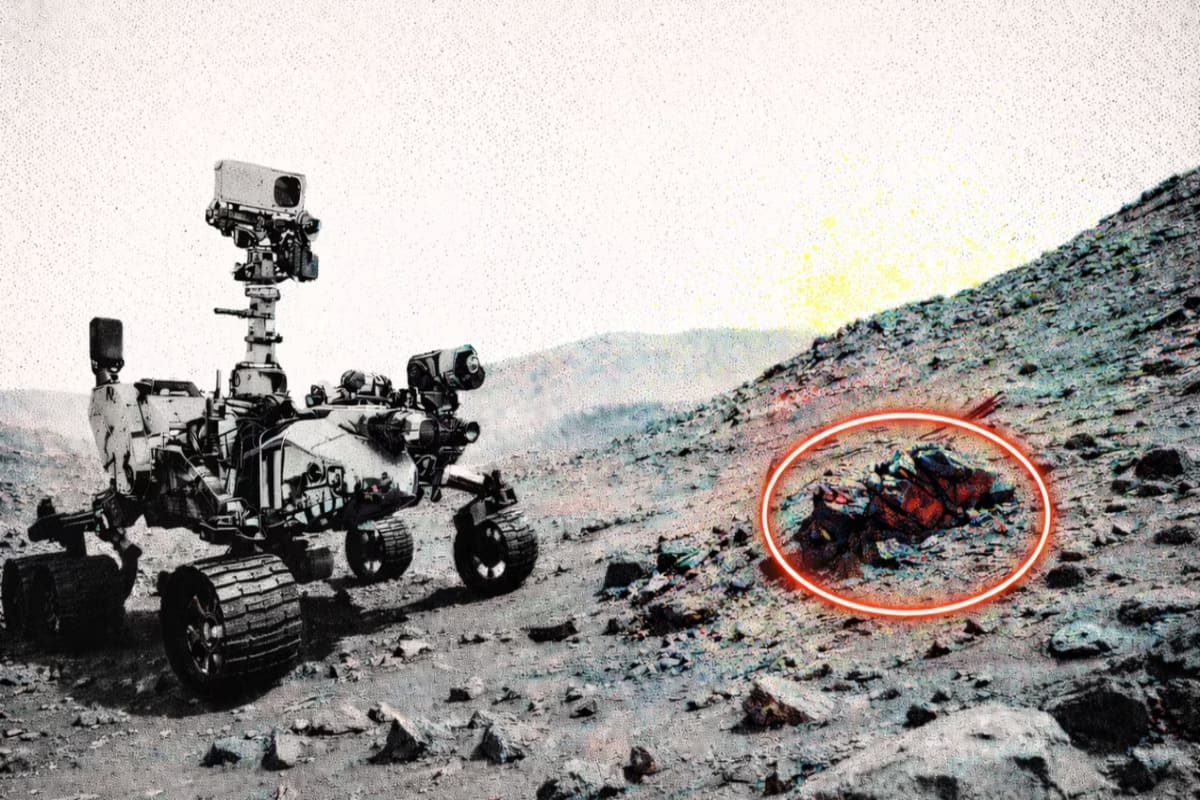
Mars, the enigmatic Red Planet, continues to unveil its secrets, pushing the boundaries of what we understand about extraterrestrial chemistry and the potential for life beyond Earth. In a groundbreaking Mars Organic Molecules Discovery, NASA’s Curiosity rover has identified the most complex organic molecules ever found on another planet. These substantial carbon chains, containing up to 12 atoms, were unearthed from ancient Martian rock formations, signaling that Mars may have preserved a far more advanced carbon chemistry than previously thought possible.
This remarkable finding, made in samples drilled from fossilized water formations within Gale Crater, opens up exciting new avenues for astrobiological research. It not only deepens our understanding of Mars' past habitability but also significantly contributes to the overarching quest for life's universal origins and distribution.
A Landmark Discovery: Unpacking Mars' Heaviest Organics
The molecules in question – decane, undecane, and dodecane – are hydrocarbons, long chains of carbon and hydrogen atoms that are commonly associated with petroleum and natural gas on Earth. Their mere size sets them apart from previous detections on Mars, which were limited to much smaller, simpler compounds like methane. Imagine finding the building blocks of crude oil on another world; that's the scale of this scientific leap.
Curiosity's sophisticated Sample Analysis at Mars (SAM) instrument was the key to this unprecedented discovery. By carefully heating rock samples to high temperatures, SAM vaporized the embedded organic compounds, allowing scientists to analyze the released gases and identify their molecular structures. This intricate process, carried out remotely over millions of miles, provided the definitive data revealing these complex carbon chains. The presence of such intricate molecules suggests that Mars' ancient past harbored conditions capable of fostering significant organic chemistry, whether through geological, extraterrestrial, or potentially biological pathways.
The Clues from Ancient Water: Where Life Might Have Thrived
This extraordinary Mars Organic Molecules Discovery wasn't made in just any Martian dirt. The samples were taken from distinctive "boxwork formations" within Gale Crater. These formations are mesmerizingly intricate, resembling raised spiderwebs etched into stone. They are, in fact, the hardened remains of mineral deposits left behind when water once percolated through cracks and fissures in the ancient Martian crust. As that water eventually evaporated or drained away, erosion wore down the softer surrounding material, leaving behind these geometric ridges that now stand in relief.
The significance of these boxwork formations cannot be overstated. Water lasting long enough to dissolve and then redeposit minerals indicates stable, enduring conditions, not just fleeting surface moisture. Such stability is absolutely crucial when searching for environments where complex chemistry could have developed and persisted. Gale Crater itself has a rich history, with previous discoveries confirming it once held a lake capable of supporting microbial life. The presence of these complex organics within such formations further strengthens the argument for ancient Martian environments being far more hospitable than once imagined, potentially harboring the conditions necessary for life to emerge.
Deciphering the Origins: Geological, Extraterrestrial, or Biological?
While the discovery of these heavy organic molecules is monumental, their precise origin remains a captivating mystery, sparking intense debate among scientists. Currently, three primary hypotheses are on the table:
- Geological Reactions: These molecules could have formed through non-biological, abiotic processes deep within the Martian crust, perhaps driven by hydrothermal activity or other geological phenomena.
- Meteoritic Delivery: Organics are common in meteorites. It's plausible that these complex compounds were delivered to Mars by impacts from space rocks rich in carbonaceous material.
- Biological Processes: The most tantalizing possibility is that these molecules are ancient biosignatures, remnants of microbial life that once thrived in Mars' watery past.
The sheer abundance and complexity of these organics, particularly within the ancient mudstone, present a compelling challenge to purely non-biological explanations. While non-biological sources cannot be entirely ruled out, their prevalence makes the case for ancient life more difficult to dismiss. As a related study suggests, Martian Organics: Is Ancient Life the Only Plausible Origin? While not definitive proof of life, the findings certainly complicate the narrative that all Martian organics are abiotic. Scientists are meticulously weighing the evidence, recognizing that each possibility carries profound implications for our understanding of life in the universe.
The Ongoing Quest: Curiosity, Perseverance, and Earth-Bound Labs
Curiosity, now well past its initial two-year mission plan (it landed in August 2012 and resumed analysis in late January 2026 after a solar conjunction), continues its incredible journey up Mount Sharp. By drilling samples at different elevations, the rover is effectively reading geological layers deposited across billions of years, providing an invaluable timeline of Martian environmental change. It will continue investigating boxwork formations throughout 2026, drilling additional samples to determine whether these heavy organic molecules are widespread across Gale Crater or concentrated in specific rock types.
Meanwhile, another robotic explorer, NASA’s Perseverance rover, has been diligently operating in Jezero Crater since 2021. Perseverance is collecting a pristine set of Martian rock and regolith samples, carefully caching them for eventual return to Earth in the early 2030s. This future sample return mission is a critical next step. Laboratory analysis on Earth will leverage instruments far more sensitive and diverse than anything that can be launched to Mars. If Perseverance's samples also contain similar complex organic molecules, it would powerfully suggest that these compounds are common across Mars rather than unique to Gale Crater. Such a finding would be compelling Mars Discovery: Complex Organics Point to Widespread Ancient Chemistry, providing robust evidence that Mars once had widespread conditions favorable for preserving organic chemistry.
What This Means for the Search for Life Beyond Earth
This Mars Organic Molecules Discovery profoundly reshapes our perspective on the Red Planet. No longer can Mars be simply viewed as a barren, rocky desert. Instead, it's increasingly understood as a world with a complex chemical past, capable of preserving the intricate molecular building blocks that are so essential to life as we know it.
Insights: The preservation of these delicate molecules over billions of years, despite Mars' harsh surface radiation, is a testament to the protective capabilities of its geology. Understanding what shielded them – whether buried deep, encased in specific minerals, or present in a stable subsurface environment – is key to future astrobiological exploration. This discovery also significantly raises the bar for potential past habitability and pushes us to reconsider how life might form and persist in extreme environments, not just on Mars but throughout the cosmos.
Practical Tip: To stay abreast of these groundbreaking findings, actively follow updates from NASA and ESA. Their mission blogs and scientific publications often provide real-time data and expert analysis that delve much deeper than general news articles. Engaging with citizen science projects, where volunteers help classify Martian images or analyze data, can also offer a unique hands-on connection to these discoveries.
Ultimately, the discovery of Mars' heaviest organic molecules is more than just a chemical finding; it's a testament to the enduring mystery and allure of the Red Planet. It confirms that Mars once hosted complex carbon chemistry, providing crucial pieces to the puzzle of its ancient past. As Curiosity continues its climb and Perseverance prepares its precious cargo for Earth, the next decade promises to be an era of unprecedented revelation in the search for life beyond our home planet. The frontier of astrobiology has just expanded, and Mars continues to lead the way.